
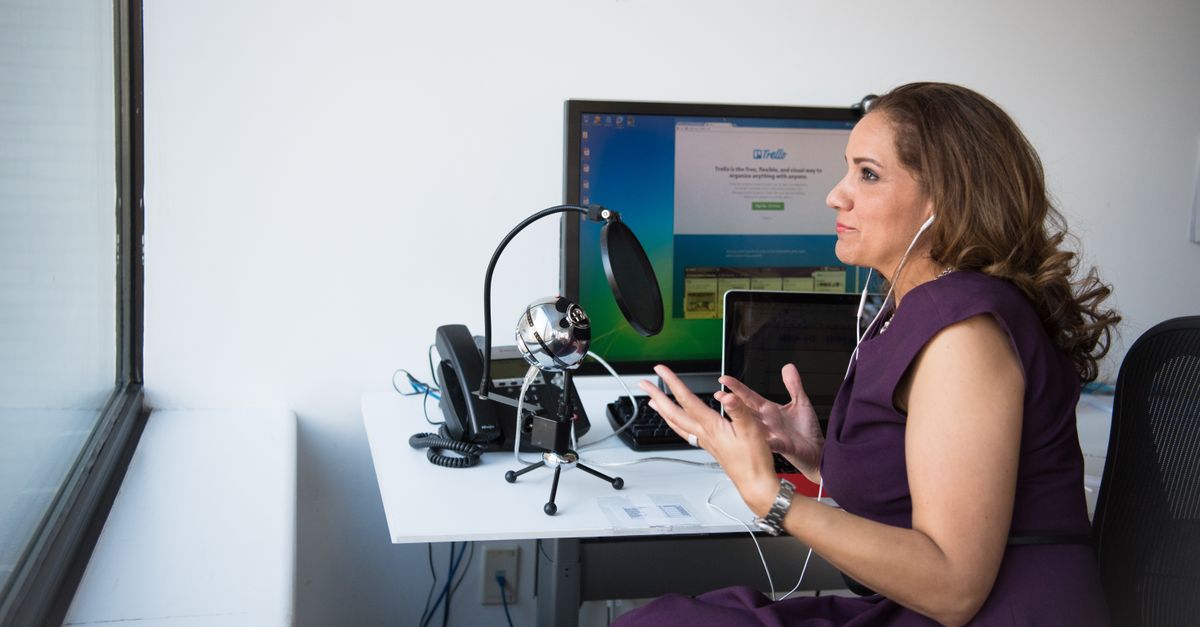
Foto de Christina Morillo no Pexels
How to Transcribe Qualitative Research Interviews with AI
Learn how to streamline your qualitative research by using AI to transcribe interviews. This guide covers step-by-step methods, essential tools, and tips for maintaining data accuracy.

Qualitative Research Specialist
Introduction to AI Transcription in Qualitative Research
Qualitative research is a cornerstone of understanding human behavior, social patterns, and consumer insights. At the heart of this methodology lies the semi-structured interview, a process that yields hours of rich, nuanced audio data. Historically, the most significant bottleneck in this process has been transcription—the manual conversion of spoken words into text.
Traditionally, researchers spent roughly four to six hours transcribing every single hour of recorded audio. This manual labor often led to burnout and delayed the critical analysis phase. However, the emergence of Artificial Intelligence (AI) has fundamentally shifted this landscape. AI transcription uses Speech-to-Text (STT) technology powered by neural networks to convert audio to text in minutes rather than hours.
By leveraging AI, researchers can now focus on coding and interpreting data rather than the mechanical task of typing. In this guide, we will explore how to integrate AI into your research workflow effectively while maintaining the academic rigor required for qualitative studies.
Step-by-Step Guide to Transcribing Interviews with AI
Transitioning from manual to AI-assisted transcription requires a structured approach to ensure data integrity and security. Follow these steps to maximize the efficiency of your research process.
1. Record with Clarity in Mind
AI performance is directly linked to the quality of the input audio. To get the best results, use a high-quality external microphone and record in a quiet environment. If you are conducting remote interviews via platforms like Zoom or Teams, ensure you use the built-in recording features which often provide clean audio tracks.
2. Choose the Right AI Platform
Select a platform that specializes in high-accuracy transcription and offers features like speaker identification (diarization). For qualitative research, it is crucial that the tool can distinguish between the interviewer and the participant. Ensure the platform complies with data privacy standards, especially if your research involves sensitive information.
3. Upload and Configure
Once you have your audio file (common formats include MP3, WAV, or M4A), upload it to your chosen AI tool. Most modern platforms allow you to select the language and the number of speakers before the process begins. This helps the AI contextually understand accents and conversational overlaps.
4. Review and Clean the Transcript
No AI is 100% perfect, especially with technical jargon or heavy accents. After the AI generates the text, perform a "clean-up" pass. Listen to the audio while reading the text to correct any minor errors. This step is also an excellent opportunity for researchers to begin their first level of immersion in the data.
5. Export for Analysis
Once the transcript is verified, export it in a format compatible with your Qualitative Data Analysis (QDA) software, such as NVivo, ATLAS.ti, or MAXQDA. Most researchers prefer .docx or .txt formats for easy importing and coding.
Recommended Tools and Platforms
Selecting the right tool can make the difference between a seamless workflow and a frustrating technical hurdle. While there are many general-purpose transcription tools, researchers need precision and security.
VoxScriber
VoxScriber stands out as a premier solution for qualitative researchers. It utilizes advanced AI models specifically tuned to handle diverse speech patterns and technical terminology. One of its core strengths is the intuitive interface that allows researchers to manage multiple interview files simultaneously.
VoxScriber offers robust speaker diarization, ensuring that the dialogue flow is captured accurately. Furthermore, the platform prioritizes data security, which is a non-negotiable requirement for Institutional Review Board (IRB) compliance in many academic settings.
General Purpose Tools
Other tools like Otter.ai or Rev serve general business needs well, but they may lack the specific formatting options or privacy controls required for deep academic research. When choosing, always check if the tool allows for easy timestamping, as this is vital for referring back to the original audio during the analysis phase.
Common Errors and How to Avoid Them
Even with the best AI, certain pitfalls can compromise your research data. Being aware of these common mistakes will help you maintain high standards of validity.
Ignoring the 'Verbatim' Requirement
In some qualitative methodologies, such as discourse analysis, every "um," "ah," and long pause is significant. Some AI tools automatically "smooth out" speech to make it more readable. To avoid losing this data, ensure your settings are set to verbatim transcription if your methodology requires it.
Neglecting Data Privacy
Uploading sensitive interview data to free, unsecured online converters is a major risk. Always use professional platforms like VoxScriber that offer encrypted uploads and clear data handling policies. Always anonymize your audio files (remove names from file titles) before uploading them to any cloud-based service.
Over-Reliance on AI Accuracy
Assuming the AI is perfect can lead to embarrassing or even misleading findings. For example, the AI might mishear "can't" as "can," which completely reverses the meaning of a participant's statement. Always conduct a manual spot-check of the most critical parts of your interviews.
Poor File Organization
When dealing with dozens of interviews, file management becomes difficult. Use a consistent naming convention (e.g., P01_Interview_Date) and keep your transcripts organized in folders that correspond to your research categories. Most AI platforms allow you to create folders directly within the dashboard.
FAQ: Frequently Asked Questions
Is AI transcription accurate enough for academic research?
Yes, modern AI transcription typically reaches 90-95% accuracy with high-quality audio. While it requires a manual review for 100% precision, it serves as a highly reliable foundation that saves researchers approximately 80% of the time usually spent on transcription.
How do I handle multiple speakers in one recording?
Use an AI tool with Speaker Diarization capabilities. This feature uses voice recognition to identify different speakers and labels them accordingly (e.g., Speaker 1, Speaker 2). VoxScriber handles this automatically, making it easy to follow the conversation flow.
Can AI transcribe interviews in languages other than English?
Absolutely. Professional AI transcription services support dozens of languages and even recognize regional dialects. This is particularly useful for international research projects or studies involving non-native speakers.
Is my research data safe with AI transcription tools?
Security depends on the platform. Professional tools like VoxScriber use end-to-end encryption and do not use your private data to train their public models. Always read the privacy policy of the service you choose to ensure it meets your institution's ethical guidelines.
Conclusion
Embracing AI for qualitative research transcription is no longer a luxury—it is a practical necessity for the modern researcher. By automating the conversion of audio to text, you reclaim valuable time that can be better spent on deep analysis and theoretical development.
If you are looking for a reliable, secure, and highly accurate partner for your next research project, consider using VoxScriber. Our platform is designed to handle the complexities of qualitative data, ensuring that every voice in your study is heard and recorded with precision. Start your next project with a streamlined workflow and let AI handle the heavy lifting of transcription.
Related tools
About the author
Qualitative Research Specialist
I hold a PhD in Communication Studies and have spent the past decade designing and conducting qualitative research — from academic interviews to large-scale focus group studies. Transcription has always been one of the most time-consuming steps in my workflow, and the rise of AI-powered tools has changed that completely.